

 jackbenchwoodworking.blogspot.com
 Introduction: Building Your Own Workbench A sturdy workbench is the cornerstone of any productive workshop. This post will guide you through the process of building a simple, robust workbench that can handle a variety of projects. We'll break down the steps into manageable chunks, making it achievable for woodworkers of all skill levels.
Materials You'll Need Before we begin, gather the following materials: Lumber: Fasteners: Tools:
- 4x4 posts (4): For the legs
- 2x4 lumber: For the frame and stretchers
- Plywood or solid wood: For the workbench top (thickness depends on desired sturdiness, typically 3/4" or thicker)
- Wood screws (various lengths)
- Wood glue
- Measuring tape
- Pencil
- Circular saw or hand saw
- Drill/driver
- Level
- Clamps
- Safety glasses
- Hearing protection
Step 1: Cutting the Lumber Start by cutting all the lumber to the required dimensions. Legs: Cut the 4x4 posts to the desired height of your workbench. A standard height is around 34-36 inches, but adjust to suit your preference. Frame: Cut the 2x4 lumber for the top frame. You'll need two long pieces and two short pieces. The length of these pieces will determine the overall size of your workbench. Stretchers: Cut the 2x4 lumber for the stretchers that connect the legs. Typically, you'll want stretchers near the bottom of the legs for stability and potentially one set higher up for additional storage or a shelf. Top: Cut the plywood or solid wood for the workbench top to the desired size, slightly larger than the frame to allow for a slight overhang.
Step 2: Assembling the Leg Frames Now we'll assemble the individual leg frames. Attach two stretcher pieces to two legs to create a U-shape. Ensure the stretchers are flush with the inside of the legs. Use wood glue and screws to secure them. Clamping the pieces together while the glue dries will ensure a strong bond. Repeat the process to create a second leg frame.
Step 3: Connecting the Leg Frames Connect the two leg frames together to form the base of the workbench. Attach the remaining stretcher pieces between the two leg frames, forming a rectangle. Again, use wood glue and screws to secure them. Make sure the entire base is square and level. If you are using additional stretchers higher up, attach them between the legs on each side.
Step 4: Building the Top Frame Construct the frame that will support the workbench top. Assemble the frame pieces using wood glue and screws, ensuring it is square. The frame should be slightly smaller than the workbench top to allow for a small overhang.
Step 5: Attaching the Top Frame to the Base Attach the top frame to the assembled leg base. Center the top frame on the base. Use wood screws to attach the frame to the legs. Ensure the screws are long enough to provide a secure connection but not so long that they protrude through the legs.
Step 6: Attaching the Workbench Top Secure the workbench top to the frame. Center the top on the frame, ensuring the overhang is consistent on all sides. Use wood screws to attach the top to the frame from underneath. Be sure the screws are not too long, to avoid protruding through the top surface.
Step 7: Finishing Touches Add any desired finishing touches. Sand the entire workbench to smooth out any rough edges or splinters. Apply a finish, such as polyurethane or varnish, to protect the wood and enhance its appearance. Several coats may be required. Consider adding additional features like a vise, dog holes, or a storage shelf to customize your workbench to your specific needs.
Conclusion: Your Completed Workbench Congratulations, you've successfully built your own workbench! This sturdy and functional workbench will serve as a valuable asset in your workshop for years to come. Remember to always prioritize safety when working with tools and materials. Enjoy building!
Craftsman Workbench With Drawers Offer
jackbenchwoodworking.blogspot.com Homak Garage Series 5 Ft. Industrial Steel Workbench With Cabinet Storage-gs00659031
 www.homedepot.com
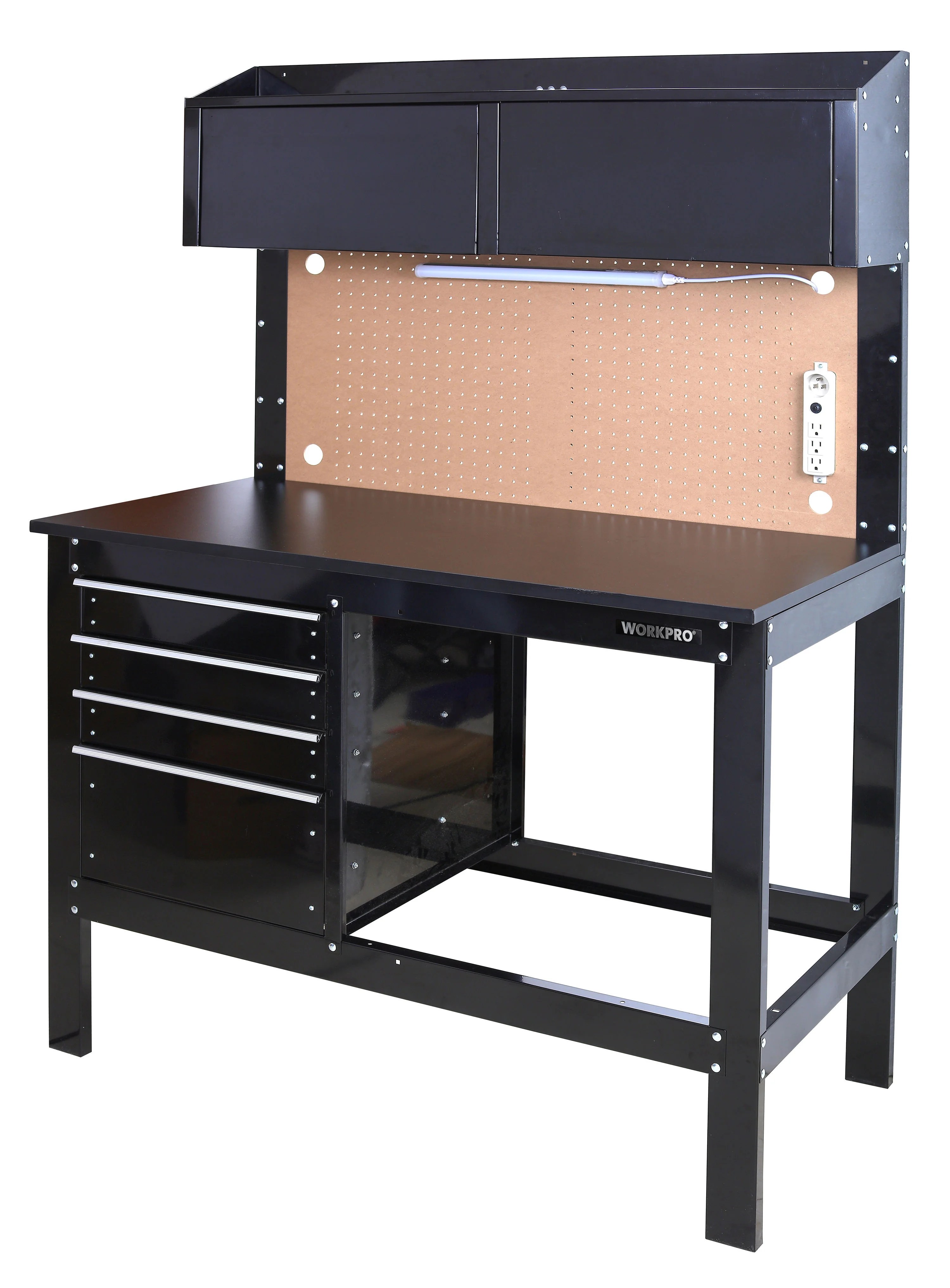
 Workpro 2-in-1 48in Workbench And Cabinet Combo With Work Light
 www.walmart.com


0 komentar:
Posting Komentar