

 www.homedepot.com Here's a step-by-step guide on how to build a simple workbench with a built-in power strip:
 Opening: The Ultimate DIY Workbench Project Ready to upgrade your workspace? A sturdy workbench is essential for any DIY enthusiast. This guide will walk you through building a workbench with a built-in power strip for convenient tool access. Get ready to create a functional and organized space for your projects!
Step 1: Planning and Materials Before you start, determine the size of the workbench that best fits your needs and available space. Standard workbench heights are around 36-42 inches. Make a detailed plan, including dimensions, materials list, and a sketch. Here's a basic materials list: Lumber (2x4s for the frame, plywood or solid wood for the top and shelves) Screws (wood screws of various lengths) Wood glue Sandpaper Finish (paint, stain, or varnish) Power strip with surge protection Wire staples or cable clamps Electrical box (optional, for hardwiring the power strip) Drill Saw (circular saw, miter saw, or hand saw) Measuring tape Level Safety glasses and gloves
Step 2: Building the Frame Cut the 2x4 lumber according to your plan for the legs and frame supports. Assemble the frame using screws and wood glue. Ensure the frame is square by measuring the diagonals; they should be equal. Reinforce the corners with corner brackets if desired.
Step 3: Attaching the Workbench Top Cut the plywood or solid wood to the desired size for the workbench top. Attach the top to the frame using screws and wood glue. Be sure to pre-drill pilot holes to prevent the wood from splitting.
Step 4: Adding Shelves (Optional) If you want shelves, cut the plywood or solid wood to the desired size. Attach the shelves to the frame using screws and wood glue. Consider the placement of the shelves based on the types of items you'll be storing.
Step 5: Installing the Power Strip Decide on the best location for the power strip on the workbench. If you are simply mounting a power strip using screws, attach it directly to the underside of the workbench top or the side of the frame. If you prefer a more secure and professional setup, consider using an electrical box. Mounting the Power Strip Directly: Secure the power strip to the workbench using screws. Ensure the screws are the appropriate length to avoid puncturing the workbench top. Using an Electrical Box (Requires Electrical Knowledge): Install an electrical box in the chosen location. Wire the power strip to the electrical box according to local electrical codes. This may involve connecting the power strip to a power cord that plugs into an outlet. *Consult a qualified electrician if you are unsure about any electrical work.* Secure the power cord of the power strip using wire staples or cable clamps to keep it tidy and prevent it from getting snagged.
Step 6: Sanding and Finishing Sand the entire workbench to smooth out any rough edges or splinters. Apply your chosen finish (paint, stain, or varnish) according to the manufacturer's instructions. Allow the finish to dry completely.
Step 7: Final Touches and Organization Inspect the workbench for any loose screws or uneven surfaces. Add any additional features you desire, such as a pegboard for tool storage or a vise. Organize your tools and materials on the workbench and shelves.
Conclusion: Your DIY Workbench is Complete! Congratulations! You've successfully built a workbench with a built-in power strip. Enjoy your new, organized, and functional workspace. This workbench will be the foundation for many future DIY projects.
Heavy-duty Plank Workbench
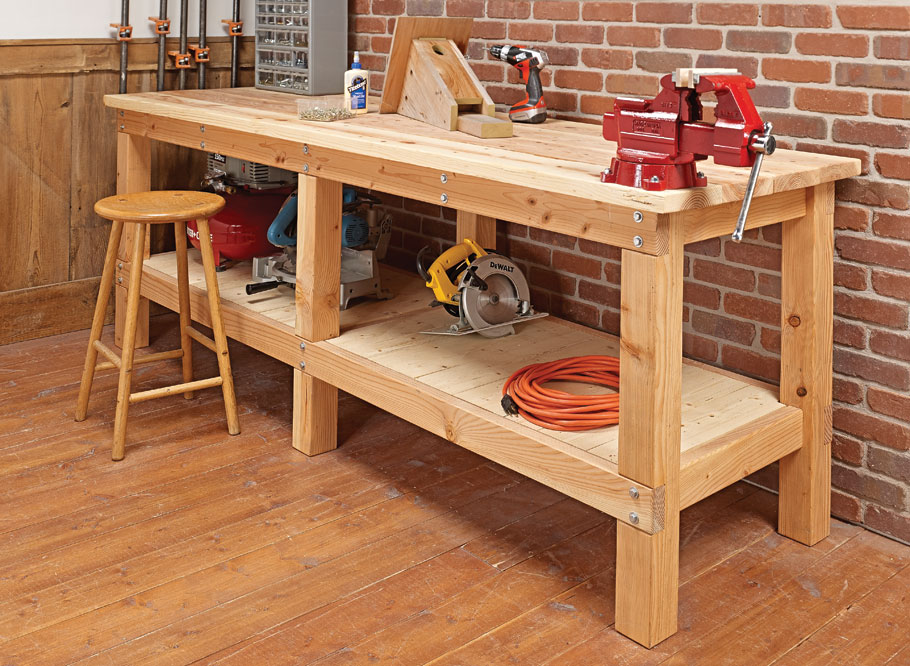 www.woodsmithplans.com
 Workpro 2-in-1 48-inch Workbench And Cabinet Combo With Light, Steel, Wood
 www.pinterest.com
 Husky 4 Ft. Solid Wood Top Workbench With Storage-g4801s-us
www.homedepot.com


0 komentar:
Posting Komentar