

 freewoodworkingplan.com
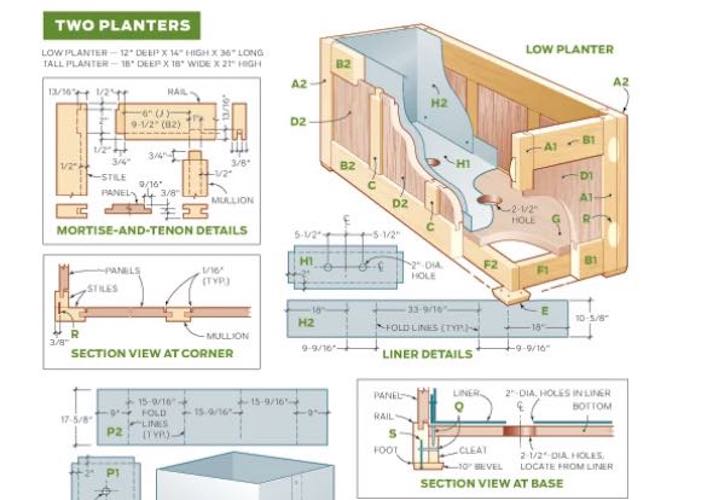
 Introduction: Building Your Own DIY Planter Box Creating your own planter box is a rewarding project that adds beauty and functionality to your outdoor space. This step-by-step guide will walk you through the process of building a simple yet sturdy planter box, perfect for flowers, herbs, or vegetables. Let's get started!
Materials You'll Need: Before you begin, gather the following materials: Wood planks (cedar, redwood, or treated lumber are excellent choices for outdoor use) Choose dimensions appropriate for the size of the planter you want. For a 12"x24"x12" planter, you'll need approximately: Two planks at 12" x 24" (sides) Two planks at 12" x 12" (ends) One plank at 2"x 24" (bottom supports) Wood screws (exterior grade) Drill with drill bits Measuring tape Pencil Saw (hand saw or circular saw) Sandpaper (optional, for smoothing edges) Landscape fabric Staple gun (and staples) Safety glasses and gloves
Step 1: Cutting the Wood Carefully measure and cut your wood planks to the desired dimensions. Accuracy is key to ensuring a well-fitting planter box. Double-check your measurements before cutting.
Step 2: Assembling the Box Now, it's time to assemble the sides of the planter box. Align one of the side pieces with one of the end pieces. Using your drill, pre-drill holes along the edges where the pieces will connect. This prevents the wood from splitting. Secure the pieces together with wood screws. Repeat this process for the remaining sides and ends until the box is fully assembled.
Step 3: Adding Bottom Support To provide support for the bottom of the planter and prevent sagging, add support planks. Attach the support plank(s) along the bottom inside of the planter. Pre-drill holes and secure with screws. Make sure that the supports are even with the bottom edge to allow for airflow.
Step 4: Lining the Planter Box Lining the planter box with landscape fabric helps retain moisture and prevent soil from escaping. Cut a piece of landscape fabric large enough to line the entire inside of the box, with some overlap. Place the fabric inside the box and fold the edges over the top. Secure the fabric to the inside of the box using a staple gun. Trim any excess fabric.
Step 5: Finishing Touches (Optional) While not strictly necessary, sanding the edges of the planter box and applying a sealant or stain can improve its appearance and longevity. Use sandpaper to smooth any rough edges or splinters. Apply a sealant or stain according to the manufacturer's instructions. This will help protect the wood from the elements.
Conclusion: Enjoy Your New Planter Box! Congratulations! You've successfully built your own DIY planter box. Now, fill it with soil and your favorite plants, and enjoy the beauty and satisfaction of your handiwork. Remember to water your plants regularly and provide them with the sunlight they need to thrive. Happy gardening!
Planter Boxes Plans
 ideasforhomeandoffice.blogspot.com
 Planter Boxes
freewoodworkingplan.com Planter Boxes
 freewoodworkingplan.com


0 komentar:
Posting Komentar