Kamis, 31 Juli 2025

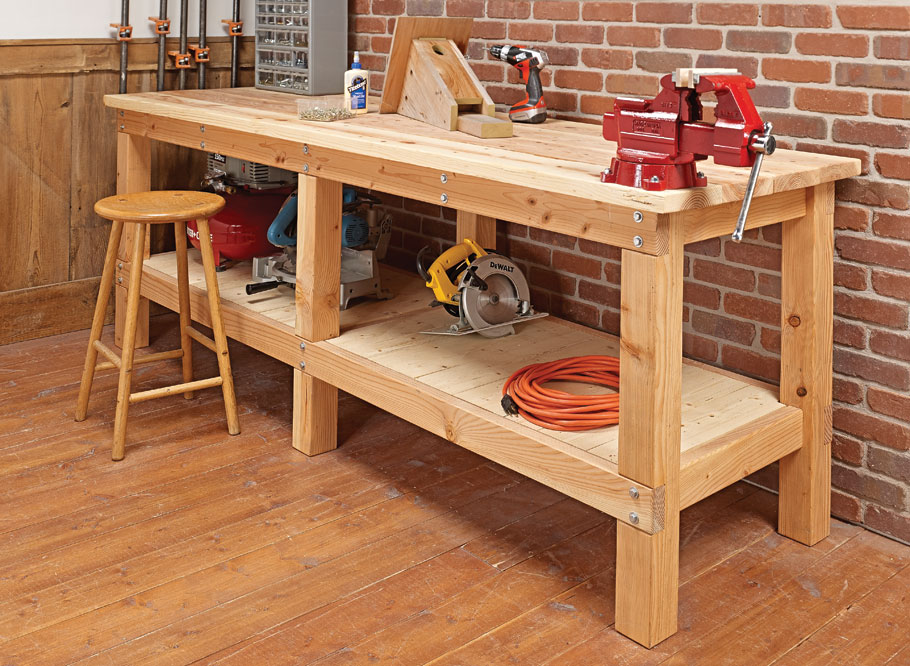
Heavy-duty plank workbench www.woodsmithplans.com

Introduction: A Workbench Revolution Building your own workbench offers unparalleled customization to fit your specific needs and space. This guide will walk you through constructing a sturdy and functional workbench featuring a built-in power strip, adding convenience and organization to your workspace. Prepare for a project that combines woodworking skills with practical electrical integration.
Materials and Tools: Gathering Your Arsenal Before diving in, ensure you have all the necessary materials and tools. This will save you time and frustration later. Here's a comprehensive list:
  • Lumber: 2x4s (for the frame and legs), plywood or solid wood for the workbench top and shelves. Determine the amount based on your desired workbench size.
  • Screws: Various sizes of wood screws for assembling the frame and attaching the top.
  • Wood Glue: For added strength in the joints.
  • Power Strip: Choose a power strip with the appropriate number of outlets and surge protection.
  • Cable Staples/Clamps: To secure the power cord neatly.
  • Electrical Box (Optional): To house the power strip for a cleaner look.
  • Safety Glasses: Essential for protecting your eyes.
  • Measuring Tape: Accuracy is key.
  • Pencil: For marking measurements.
  • Circular Saw or Table Saw: For cutting the lumber to size.
  • Drill/Driver: For driving screws.
  • Clamps: To hold pieces together while the glue dries.
  • Sandpaper: For smoothing rough edges.
  • Wire Strippers/Crimpers (If wiring an electrical box): For safely working with electrical wires.
  • Level: To ensure the workbench is stable.
  • Step 1: Designing and Planning Your Workbench Start by determining the dimensions of your workbench. Consider the space you have available and the types of projects you'll be working on. Sketch out a design, including the placement of the power strip and any shelves. A detailed plan will prevent errors and ensure a smooth build.
    Step 2: Building the Frame Cut the 2x4s according to your plan to create the frame. Use wood glue and screws to assemble the frame. Ensure all corners are square and secure. Clamps will be your best friend during this process. Consider adding cross braces for extra stability, especially if you plan on working with heavy materials.
    Step 3: Constructing the Legs Cut four 2x4s to the desired height of your workbench. Attach the legs to the inside corners of the frame using wood glue and screws. Again, ensure everything is square and level. Reinforce the leg joints with additional bracing if needed.
    Step 4: Adding Shelves (Optional) If your design includes shelves, cut the plywood or solid wood to the appropriate sizes. Attach the shelves to the frame using wood glue and screws. Consider adding supports underneath the shelves for extra weight capacity.
    Step 5: Creating the Workbench Top Cut the plywood or solid wood for the workbench top to the desired size. Attach the top to the frame using wood glue and screws. Ensure the top is flush with the frame. You may want to apply multiple layers of plywood for added thickness and durability.
    Step 6: Integrating the Power Strip Decide where you want to mount the power strip. If using an electrical box, install it securely to the frame. Carefully route the power strip's cord and secure it using cable staples or clamps. If wiring the power strip directly to the electrical box (this requires electrical knowledge and should be done with caution and only if you are qualified), ensure all connections are properly insulated and grounded. If you are uncomfortable working with electrical wiring, consult a qualified electrician.
    Step 7: Sanding and Finishing Sand all surfaces of the workbench to smooth any rough edges. Apply a finish, such as polyurethane or varnish, to protect the wood and enhance its appearance. Allow the finish to dry completely before using the workbench.
    Step 8: Final Touches and Testing Inspect the workbench for any loose screws or uneven surfaces. Level the workbench by adjusting the feet (if applicable). Test the power strip to ensure it is working correctly. Organize your tools and materials on the workbench and shelves.
    Conclusion: Your Powerhouse Workbench is Ready Congratulations! You've successfully built a sturdy and functional workbench with a built-in power strip. This customized workspace will enhance your productivity and organization, making your projects more enjoyable and efficient. Enjoy your new workbench!

    14 Super-simple Workbenches You Can Build — The Family Handyman

    14 super-simple workbenches you can build — the family handyman www.familyhandyman.com

    14 Super-simple Workbenches You Can Build — The Family Handyman

    14 super-simple workbenches you can build — the family handyman www.familyhandyman.com

    Heavy-duty Plank Workbench

    Heavy-duty plank workbench www.woodsmithplans.com
    Read More..

    Rabu, 30 Juli 2025

    Workbench lighting ideas buildyourownwoodworking.blogspot.com

    Introduction: Brighten Your Workspace with a DIY Lighted Workbench Building a workbench is a rewarding project for any DIY enthusiast. Adding integrated lighting takes it to the next level, providing a well-lit workspace for detail-oriented tasks. This guide provides a step-by-step approach to constructing a sturdy and illuminated workbench.
    Materials and Tools: Gathering Your Resources First, gather all the necessary materials and tools. The list can vary depending on the desired size and features of your workbench, but a basic list includes:
  • Lumber (2x4s, plywood, or dimensional lumber for the frame and top)
  • LED strip lights or shop lights
  • Wood screws (various sizes)
  • Wood glue
  • Sandpaper
  • Polyurethane or sealant
  • Electrical wire
  • Wire connectors
  • Power cord
  • Switch
  • Safety glasses
  • Ear protection
  • Measuring tape
  • Pencil
  • Circular saw or hand saw
  • Drill/Driver
  • Clamps
  • Wire strippers/crimpers
  • Step 1: Planning and Design Before you start cutting wood, take the time to plan out the workbench design. Consider the size you need, the height that is comfortable for you, and any additional features like drawers, shelves, or a vise. Sketch out your design and create a cut list to ensure you purchase the correct amount of lumber. Decide where you want to integrate the lighting, consider recessed or surface mounting.
    Step 2: Building the Frame Begin constructing the frame. Typically, this involves building a rectangular frame from 2x4s for the base. Use wood glue and screws to create strong joints. Ensure the frame is square by measuring the diagonals. Add additional supports as needed for added strength and stability. The supports should be spaced appropriately for the weight you anticipate putting on the bench.
    Step 3: Attaching the Legs Attach the legs to the frame. Ensure they are securely fastened with screws and glue. The height of the legs will determine the overall height of your workbench. Double-check that all legs are the same length to prevent wobbling. Consider adding adjustable feet for uneven surfaces.
    Step 4: Constructing the Workbench Top Create the workbench top using plywood or dimensional lumber. Cut the material to the desired size and shape. Apply glue to the frame and carefully position the top. Secure the top to the frame using screws from underneath.
    Step 5: Installing the Lighting This is where you add the integrated lighting. If using LED strip lights, adhere them to the underside of the workbench top, preferably recessed for a cleaner look. If using shop lights, mount them according to the manufacturer's instructions. Ensure the wiring is safely routed and secured.
    Step 6: Wiring the Lighting Wire the lights to a power source using electrical wire, wire connectors, a power cord, and a switch. *Important: If you are not comfortable working with electricity, consult a qualified electrician.* Connect the wires according to the lighting type. It's common to use a switch, so you can conveniently turn the lights on and off. Insulate all connections properly.
    Step 7: Sanding and Finishing Sand all surfaces of the workbench to create a smooth finish. This will remove any splinters and prepare the wood for finishing. Apply a coat of polyurethane or sealant to protect the wood from moisture and wear.
    Step 8: Adding Finishing Touches Add any finishing touches, such as installing drawers, shelves, or a vise. You may also want to add edge banding to the workbench top for a more professional look.
    Conclusion: Enjoy Your New Lighted Workbench Congratulations! You've successfully built a sturdy and illuminated workbench. Your workspace is now brighter and more efficient. Remember to regularly inspect the workbench and lighting to ensure everything is in good working order. Enjoy your new, well-lit workspace!

    Industrial Workbench, Shelves & Lighting!

    Industrial workbench, shelves & lighting! www.pinterest.com

    Workbench Lighting

    Workbench lighting www.trainboard.com

    Workbench Lighting Ideas

    Workbench lighting ideas buildyourownwoodworking.blogspot.com
    Read More..

    Selasa, 29 Juli 2025

    Bar stool plans myoutdoorplans.com

    Opening: Get Ready to Build Your Own Bar Stool! Ready to add some custom seating to your kitchen or bar area? Building your own bar stool is a rewarding project that allows you to personalize the design and save money. This step-by-step guide will walk you through the process, from gathering materials to the final finish. Let's get started!
    Step 1: Gather Your Materials and Tools Before you begin, make sure you have everything you need. The specific wood and dimensions will depend on your desired design, but here's a general list:
  • Wood for the legs (usually 4)
  • Wood for the seat (circular, square, or shaped)
  • Wood for the stretchers (connecting the legs)
  • Wood screws (appropriate length for your wood thickness)
  • Wood glue
  • Sandpaper (various grits, e.g., 80, 120, 220)
  • Wood finish (stain, paint, varnish, etc.)
  • Tools you'll need:
  • Measuring tape
  • Pencil
  • Saw (circular saw, miter saw, or hand saw)
  • Drill with drill bits
  • Screwdriver
  • Clamps
  • Sanding block or orbital sander
  • Safety glasses
  • Dust mask
  • Step 2: Cut the Wood Pieces Carefully measure and cut all the wood pieces according to your plan. Precision is key here to ensure a sturdy and level stool.
  • Legs: Cut the legs to the desired height. Ensure all four legs are exactly the same length.
  • Seat: Cut the seat to the desired shape and size. A circular saw or jigsaw is useful for curved seats.
  • Stretchers: Cut the stretchers (the pieces connecting the legs) to the correct lengths. Decide on the placement of the stretchers – usually a few inches from the floor, forming a square or rectangular support frame.
  • Step 3: Assemble the Base (Legs and Stretchers) This step involves connecting the legs and stretchers to create the stool's base.
  • Apply wood glue to the ends of the stretchers where they will meet the legs.
  • Clamp the stretcher to the leg, ensuring a square and tight fit.
  • Pre-drill pilot holes through the stretcher into the leg. This prevents the wood from splitting when you drive in the screws.
  • Drive screws through the pilot holes, securing the stretcher to the leg.
  • Repeat for all four legs and stretchers, forming the stool's base. Make sure the entire base is square and stable. Use a carpenter's square to verify.
  • Step 4: Attach the Seat Now it's time to attach the seat to the assembled base.
  • Center the seat on top of the base.
  • From underneath the base (where the legs connect), pre-drill pilot holes up into the seat.
  • Apply wood glue to the top of the leg connection points.
  • Drive screws through the pilot holes, securing the seat to the base. Ensure the seat is firmly attached and doesn't wobble.
  • Step 5: Sand and Finish This is the final stage, where you smooth out the surfaces and apply the finish of your choice.
  • Sand all surfaces of the bar stool, starting with a coarser grit (80 or 120) and working your way up to a finer grit (220). This will remove any imperfections and create a smooth surface for finishing.
  • Wipe away all sanding dust with a clean cloth.
  • Apply your chosen finish according to the manufacturer's instructions. This could be stain, paint, varnish, or a combination of these. Multiple coats may be necessary for the desired look and protection. Allow each coat to dry completely before applying the next.
  • Conclusion: Enjoy Your Handcrafted Bar Stool! Congratulations! You've successfully built your own bar stool. Take a step back, admire your craftsmanship, and enjoy the fruits of your labor. You now have a custom piece of furniture that you can be proud of. Remember to always prioritize safety when working with tools and materials. With a little practice, you can tackle even more woodworking projects!

    Wooden Bar Stool Plans • Woodarchivist

    Wooden bar stool plans • woodarchivist woodarchivist.com

    Bar Stool Plans

    Bar stool plans myoutdoorplans.com

    Bar Stool Plans • Woodarchivist

    Bar stool plans • woodarchivist woodarchivist.com
    Read More..

    Senin, 28 Juli 2025

    Puzzle table woodworking plans woodworkingkedra.blogspot.com

    ```html
    Opening: Unleash Your Inner Craftsman: Building a DIY Puzzle Table Are you tired of sprawling jigsaw puzzles taking over your dining table? Ready to dedicate a space solely for your puzzling passion? Then this guide is for you! We'll walk you through the steps of building your own DIY puzzle table, providing a dedicated and organized area for your next masterpiece.
    Step 1: Planning and Design Before diving into the build, thoughtful planning is essential. Consider these factors:
  • Puzzle Size: Determine the largest puzzle size you typically work on. This will dictate the tabletop dimensions. Add extra space for sorting trays or reference images.
  • Table Height: Choose a comfortable height for you to stand or sit while puzzling. Measure an existing table that works well for you as a reference.
  • Leg Style: Opt for simple straight legs, hairpin legs for a modern look, or even folding legs for easy storage.
  • Material Selection: Consider MDF (Medium Density Fiberboard) for the tabletop (it's smooth and affordable), and solid wood for the legs (for stability). Plywood can be used, but may require more sanding.
  • Once you've considered these aspects, create a rough sketch or a detailed plan with dimensions.
    Step 2: Gathering Materials and Tools Based on your plan, gather the necessary materials. Here's a basic list:
  • Tabletop Material: MDF, Plywood, or solid wood
  • Leg Material: Solid wood, metal hairpin legs, or folding legs
  • Wood Screws: Appropriate length for attaching the legs to the tabletop
  • Wood Glue: For extra secure connections
  • Sandpaper: Various grits (e.g., 80, 120, 220)
  • Wood Finish: Paint, stain, or varnish
  • Tools: Circular saw or jigsaw, drill, screwdriver, measuring tape, pencil, sandpaper or sanding block, clamps, safety glasses, dust mask
  • Step 3: Cutting the Tabletop Using your circular saw or jigsaw, carefully cut the tabletop material to the desired dimensions. Ensure the edges are straight and square. If using MDF, be sure to wear a dust mask as MDF dust can be harmful.
    Step 4: Preparing the Legs If using pre-made legs (like hairpin legs), skip to the next step. If building your own wooden legs, cut the wood to the desired length and shape. Consider adding a slight taper for a more refined look. Sand the legs smooth.
    Step 5: Attaching the Legs Position the legs on the underside of the tabletop, ensuring they are evenly spaced and aligned. Apply wood glue to the top of each leg and clamp them in place. Predrill pilot holes through the tabletop and into the legs to prevent the wood from splitting. Secure the legs with wood screws.
    Step 6: Sanding and Finishing Sand the entire table, starting with a coarser grit sandpaper (80 or 120) and gradually working your way up to a finer grit (220). This will create a smooth surface. Wipe away any sawdust with a damp cloth. Apply your chosen finish (paint, stain, or varnish) according to the manufacturer's instructions. Allow the finish to dry completely between coats.
    Step 7: Adding Finishing Touches (Optional) Consider adding features like:
  • Edging: Attach a lip or edging around the tabletop to prevent puzzle pieces from falling off.
  • Sorting Trays: Build or purchase small trays that can be placed on the tabletop to organize puzzle pieces by color or shape.
  • Felt or Fabric Cover: Cover the tabletop with felt or fabric for a softer surface that will help keep puzzle pieces in place.
  • Conclusion: Enjoy Your New Puzzle Haven! Congratulations! You've successfully built your own DIY puzzle table. Now you have a dedicated space to enjoy your favorite pastime without cluttering your living area. Gather your puzzles, find a comfortable chair, and get ready to piece together your next masterpiece! This custom-built table will undoubtedly enhance your puzzling experience.
    ```

    Puzzle Table Woodworking Plans

    Puzzle table woodworking plans woodworkingkedra.blogspot.com

    Jigsaw Puzzle Table Woodworking Plans

    Jigsaw puzzle table woodworking plans woodworkingathome.blogspot.com

    Diy Jigsaw Puzzle Table Plans: The Puzzle Table

    Diy jigsaw puzzle table plans: the puzzle table thepuzzletable.com
    Read More..

    Minggu, 27 Juli 2025

    Wooden serving tray pinecastle.org

    Opening: A Rustic Touch to Your Home DIY Wooden Serving Tray Ready to add a touch of rustic charm and functionality to your home? Building your own wooden serving tray is a fantastic weekend project that's both rewarding and practical. This guide will walk you through the process, step-by-step, ensuring you create a beautiful and durable tray you'll be proud to use. Get ready to unleash your inner craftsman (or craftswoman!) and create a beautiful wooden serving tray.
    Step 1: Gathering Your Materials Before you begin, you'll need to collect the necessary materials. Here's a comprehensive list:
  • Wood for the base: Choose your favorite wood type and thickness. Pine, cedar, or reclaimed wood are popular options. (Approximately 12" x 18" is a good starting size, but adjust to your preference)
  • Wood for the sides: These will form the frame of the tray. (Approximately 2" wide and long enough to frame your base)
  • Wood glue: A high-quality wood glue is essential for a strong bond.
  • Screws or nails: To reinforce the glue joints. Choose the appropriate size for your wood thickness.
  • Sandpaper: Various grits (80, 120, 220) for smoothing the wood.
  • Wood stain or paint: To finish the tray to your liking.
  • Handles: Choose handles that complement your tray's style (metal, rope, or wooden).
  • Wood filler (optional): To fill any imperfections.
  • Polyurethane or varnish (optional): For a protective top coat.
  • Step 2: Preparing the Wood Begin by cutting the wood for the base to your desired size. Then, cut the side pieces to the correct length, ensuring they'll form a snug frame around the base. Sand all the wood pieces thoroughly, starting with a coarser grit (80) and gradually moving to finer grits (120, 220) for a smooth finish. This step is crucial for a professional-looking result. Clean any dust from the wood surface before proceeding.
    Step 3: Assembling the Frame Apply wood glue to the edges of the base where the side pieces will attach. Carefully position the side pieces onto the base, ensuring they are flush and aligned. Use clamps to hold the frame together tightly while the glue dries. Reinforce the joints by driving screws or nails through the side pieces into the base. Countersink the screws if necessary and fill the holes with wood filler, if desired. Let the glue dry completely according to the manufacturer's instructions.
    Step 4: Sanding and Finishing Once the glue is dry, remove the clamps and sand the entire tray again, paying particular attention to the joints. Ensure all surfaces are smooth and even. Now it's time to apply your chosen finish. Apply stain, paint or finish as desired. If you are staining, apply the stain evenly, let it sit for the recommended time, and then wipe off the excess with a clean cloth. For paint, apply several thin coats, allowing each coat to dry completely before applying the next. After the stain or paint is dry, apply a protective top coat of polyurethane or varnish for added durability and water resistance.
    Step 5: Attaching the Handles Select the placement for your handles. Mark the screw holes according to the handle design. Drill pilot holes to prevent splitting the wood. Attach the handles using the screws provided. Make sure they are securely fastened.
    Step 6: Final Touches and Inspection Give your tray a final inspection. Look for any rough spots or imperfections that need attention. Apply another coat of finish if necessary. Let the tray dry completely before using it.
    Conclusion: Enjoy Your Handcrafted Serving Tray Congratulations! You've successfully built your own wooden serving tray. This tray is not only a functional addition to your home but also a testament to your craftsmanship. Use it to serve drinks, snacks, or even as a decorative piece. With proper care, your handmade serving tray will be a cherished item for years to come.

    Pin On Boxes

    Pin on boxes www.pinterest.com

    Wooden Serving Tray

    Wooden serving tray pinecastle.org

    Buy Classic Wooden Serving Tray At 20% Off Online

    Buy classic wooden serving tray at 20% off online www.woodenstreet.com
    Read More..

    Sabtu, 26 Juli 2025

    Traditional picture frames freewoodworkingplan.com

    Introduction: Building Your Own Picture Frame Want to display your favorite photos, artwork, or certificates with a touch of personal flair? Building your own picture frame is a rewarding DIY project that allows you to customize the size, style, and materials to perfectly complement your piece. This guide will walk you through the process, step by step, from planning to finishing.
    Materials and Tools You'll Need: Before you start, gather the necessary materials and tools. This will ensure a smooth and efficient building process.
    • Wood (pine, poplar, or your desired species)
    • Measuring tape
    • Pencil
    • Miter saw (or hand saw with a miter box)
    • Wood glue
    • Clamps (corner clamps are ideal)
    • Sandpaper (various grits)
    • Wood filler (optional, for filling gaps)
    • Finishing supplies (stain, paint, varnish, etc.)
    • Safety glasses
    Step 1: Measuring and Cutting the Wood The most important part of picture frame construction is ensuring accurate measurements and cuts.
    1. Measure Your Artwork: Determine the exact width and height of the picture you want to frame.
    2. Calculate Frame Dimensions: Add the desired width of the frame moulding to each side of the artwork. For example, if your picture is 8x10 inches and you want a 2-inch wide frame, you'll need to cut pieces to fit a 12x14-inch opening.
    3. Cut the Wood: Using a miter saw or miter box, cut four pieces of wood at a 45-degree angle. The longest point of each piece should match the frame's outer dimensions you calculated. Ensure that two pieces match the longer dimension and two match the shorter dimension. Accuracy is crucial here!.
    Step 2: Assembling the Frame With your wood cut precisely, it's time to assemble the frame.
    1. Apply Glue: Apply wood glue to the mitered ends of the four pieces of wood. Be generous, but avoid excessive dripping.
    2. Join the Corners: Carefully join the corners to form the rectangular frame. Make sure the mitered edges align perfectly.
    3. Clamp the Frame: Use corner clamps or regular clamps to hold the frame together securely. Apply even pressure to ensure a tight bond.
    4. Let the Glue Dry: Allow the glue to dry completely according to the manufacturer's instructions, typically 24 hours.
    Step 3: Sanding and Filling (Optional) After the glue has dried, prepare the frame for finishing.
    1. Remove Clamps: Gently remove the clamps from the frame.
    2. Sand the Frame: Use sandpaper to smooth any rough edges, imperfections, or excess glue. Start with a coarser grit (e.g., 120-grit) and gradually move to finer grits (e.g., 220-grit).
    3. Fill Gaps (Optional): If there are any small gaps at the mitered corners, use wood filler to fill them in. Let the filler dry completely and then sand it smooth.
    Step 4: Finishing the Frame Now comes the fun part: adding the finishing touches to your frame.
    1. Choose Your Finish: Select your desired finish, such as stain, paint, varnish, or a combination of these.
    2. Apply the Finish: Apply the finish according to the manufacturer's instructions. Use a brush, cloth, or spray gun, depending on the product.
    3. Multiple Coats (Optional): For a more durable and professional finish, apply multiple coats, sanding lightly between each coat.
    4. Let the Finish Dry: Allow the finish to dry completely.
    Step 5: Installing Your Artwork The final step is to install your artwork into the frame.
    1. Prepare the Backing: Cut a piece of cardboard or foam board slightly smaller than the inside dimensions of the frame. This will serve as the backing for your artwork.
    2. Insert the Artwork: Place your artwork into the frame, followed by the backing board.
    3. Secure the Backing: Secure the backing board with flexible tabs (point driver), glazier points, or by using tape.
    4. Add Hanging Hardware: Attach hanging hardware, such as D-rings and wire, to the back of the frame.
    Conclusion: Enjoy Your Handmade Picture Frame Congratulations! You've successfully built your own picture frame. Step back and admire your handiwork. Now you can proudly display your cherished memories or artwork in a frame that you crafted yourself. The possibilities are endless with different wood types, finishes, and embellishments. Experiment and have fun creating unique frames that reflect your personal style.

    Picture Frames

    Picture frames freewoodworkingplan.com

    Five Photo Frame Plans

    Five photo frame plans www.pinterest.com

    Traditional Picture Frames

    Traditional picture frames freewoodworkingplan.com
    Read More..

    Jumat, 25 Juli 2025

    Mid century modern walnut executive desk www.pinterest.jp

    Opening: The Perfect DIY Mid-Century Modern Desk Awaits! Ready to add a touch of retro elegance to your home office without breaking the bank? This step-by-step guide will walk you through building your own stunning mid-century modern desk. It's a rewarding project that combines style, functionality, and the satisfaction of crafting something unique.
    Step 1: Gathering Your Materials Before you begin, you'll need to assemble your supplies. The exact dimensions will depend on your desired desk size, but here's a general list:
  • Desktop: A solid wood panel (e.g., plywood, butcher block) in your chosen size and wood type. Consider the finish you want – natural, stained, or painted.
  • Legs: Four mid-century modern style legs. These can be purchased online or at hardware stores. Choose the height based on your comfort and chair height.
  • Apron (Optional): Wood for creating a support frame around the underside of the desktop. Adds stability and a more refined look.
  • Screws: Wood screws of appropriate length for attaching the legs and apron (if using).
  • Wood Glue: High-quality wood glue for added strength in joints.
  • Sandpaper: Various grits (e.g., 120, 220) for smoothing the wood.
  • Finish: Stain, paint, varnish, or polyurethane, depending on your desired aesthetic.
  • Tools: Drill, screwdriver, measuring tape, pencil, clamps, sandpaper, safety glasses, dust mask.
  • Step 2: Preparing the Desktop Begin by preparing your desktop. If using raw wood, sand the surface smooth with progressively finer grits of sandpaper, starting with 120 grit and finishing with 220 grit. This will create a smooth surface for your chosen finish. Wipe away any sawdust with a clean cloth.
    Step 3: Building the Apron (Optional) If you're adding an apron, cut the wood pieces to the desired length and width. Assemble the apron frame using wood glue and screws. Clamp the frame together until the glue dries completely. Sand the apron frame smooth, paying attention to the joints.
    Step 4: Attaching the Apron (if applicable) Position the apron frame on the underside of the desktop. Apply wood glue to the top edges of the apron frame where it will contact the desktop. Secure the apron to the desktop using screws, ensuring they are long enough to penetrate both the apron and the desktop securely, but not so long that they poke through the top.
    Step 5: Attaching the Legs Locate the desired position for each leg on the underside of the desktop (or apron, if using). Most mid-century modern legs have pre-drilled holes for easy attachment. Align each leg and secure it using screws. Ensure the legs are evenly spaced and angled correctly for a stable and balanced desk.
    Step 6: Sanding and Finishing Once the legs are securely attached, give the entire desk a final sanding, paying attention to any rough edges or imperfections. Wipe away all sawdust. Apply your chosen finish (stain, paint, varnish, or polyurethane) according to the manufacturer's instructions. Multiple coats may be necessary for optimal protection and appearance, sanding lightly between coats.
    Step 7: Final Touches and Enjoy! Allow the finish to dry completely before placing the desk in its final location. Add any desired accessories, such as cable management solutions or desk organizers. Step back and admire your handiwork! You've successfully created a beautiful and functional mid-century modern desk.
    Conclusion: Your DIY Desk is Complete! Congratulations on building your own mid-century modern desk! This project is a testament to your creativity and craftsmanship. Enjoy your stylish and functional workspace for years to come. Remember to adapt the dimensions and materials to suit your specific needs and preferences. Happy crafting!

    Round-up: Best Mid-century Modern Desks

    Round-up: best mid-century modern desks housefur.com

    Mid Century Modern Walnut Executive Desk

    Mid century modern walnut executive desk www.pinterest.jp

    Mid-century Modern Rosewood Writing Desk By Leo Bub For Wertmöbel, 1960s

    Mid-century modern rosewood writing desk by leo bub for wertmöbel, 1960s www.vntg.com
    Read More..

    Kamis, 24 Juli 2025

    Craftsman stationary work bench: 29-1/2" wide, 18" deep, 40-1/4" high, black red 23167927 msc atelier-yuwa.ciao.jp

    Opening: Building a DIY Workbench with Integrated Dust Collection Want to upgrade your workshop with a functional and efficient workbench? This step-by-step guide will walk you through building a sturdy workbench with a built-in dust collection system. This project will help keep your workspace clean and improve your overall workflow. It requires some woodworking experience and access to power tools, but the result is a custom workbench tailored to your needs.
    Step 1: Planning and Design Before you start cutting wood, it's crucial to have a solid plan. Consider these factors:
    • Dimensions: Determine the ideal length, width, and height of your workbench. Consider the size of your workspace and the types of projects you'll be working on. A common size is around 6 feet long, 3 feet wide, and 36 inches tall.
    • Dust Collection System: Decide on the type of dust collection you want to integrate. Options include a central dust collector, a shop vacuum, or a combination. Plan the location of the dust collection port(s) and the routing of the ductwork.
    • Materials: Choose durable and stable materials. Popular choices include plywood, hardwood (like maple or oak), and dimensional lumber (like 2x4s).
    • Storage: Think about incorporating storage solutions like drawers, shelves, or cabinets into your workbench design.
    Sketch out your design and create a detailed cut list. This will help you minimize waste and ensure accurate cuts.
    Step 2: Gathering Materials and Tools Gather all the necessary materials and tools before you begin construction. Here's a general list:
    • Wood: Plywood sheets (for the top and shelves), lumber (for the frame and legs), hardwood (optional for the top or accents).
    • Fasteners: Screws, nails, wood glue.
    • Dust Collection Components: Dust collection hose, fittings, blast gates, and a collection device (shop vac, dust collector).
    • Tools: Saw (circular saw, table saw, or hand saw), drill, screwdriver, measuring tape, square, clamps, sander, router (optional for edge finishing), safety glasses, hearing protection.
    Double-check your cut list and ensure you have all the necessary materials in the correct quantities.
    Step 3: Building the Frame The frame provides the structural support for your workbench.
    • Cut the Frame Pieces: Cut the lumber according to your cut list. Ensure all pieces are square and accurate.
    • Assemble the Frame: Use screws and wood glue to assemble the frame. Start by building the four legs, then connect them with horizontal rails. Use clamps to hold the pieces together while the glue dries.
    • Add Braces: Add diagonal braces to the frame for extra stability. Secure them with screws and glue.
    Ensure the frame is square and level before proceeding.
    Step 4: Constructing the Workbench Top The workbench top is the work surface.
    • Cut the Top Pieces: Cut the plywood to the desired dimensions for the top. You may choose to laminate multiple layers of plywood for a thicker, more durable top.
    • Attach the Top to the Frame: Apply wood glue to the frame and place the top on it. Secure the top to the frame with screws from underneath.
    • Edge Treatment (Optional): You can add a hardwood edge banding to the top for a more finished look and added protection. Use a router to round over the edges for comfort.
    Sand the top smooth and apply a finish (such as polyurethane) to protect it from moisture and wear.
    Step 5: Integrating the Dust Collection System Now it's time to incorporate the dust collection system.
    • Dust Collection Ports: Determine the location of the dust collection ports on the workbench top. Common locations are near saws or other tools that generate a lot of dust.
    • Routing the Ductwork: Cut holes in the workbench top for the dust collection ports. Route the ductwork (hose or PVC pipe) underneath the workbench, connecting the ports to a central collection point.
    • Connecting to the Dust Collector: Connect the ductwork to your shop vacuum or dust collector. Use blast gates to control the airflow to different ports.
    Test the dust collection system to ensure it's working effectively.
    Step 6: Adding Storage (Optional) Enhance your workbench with drawers, shelves, or cabinets.
    • Design and Build Storage Units: Design and build the storage units according to your needs. Consider the size and weight of the tools and materials you'll be storing.
    • Install Storage Units: Attach the storage units to the workbench frame. Ensure they are securely fastened.
    Add handles and knobs to the drawers and doors.
    Step 7: Finishing Touches Complete the workbench with these final touches.
    • Sanding and Finishing: Sand all surfaces smooth and apply a finish to protect the wood. Consider using a durable finish like polyurethane or varnish.
    • Adding Accessories: Add accessories like a vise, tool holders, or a power strip to the workbench.
    • Clean Up: Clean up your workspace and organize your tools.
    Inspect the workbench for any imperfections and make any necessary adjustments.
    Conclusion: Enjoy Your New Workbench! Congratulations on building your own workbench with integrated dust collection! This custom workbench will provide you with a functional and efficient workspace for years to come. Regularly maintain your workbench and dust collection system to keep it in top condition. Enjoy creating your next project!

    Craftsman Stationary Work Bench: 29-1/2" Wide, 18" Deep, 40-1/4" High, Black Red 23167927 Msc

    Craftsman stationary work bench: 29-1/2" wide, 18" deep, 40-1/4" high, black red 23167927 msc atelier-yuwa.ciao.jp

    Husky 4 Ft. Solid Wood Top Workbench With Storage-g4801s-us

    Husky 4 ft. solid wood top workbench with storage-g4801s-us www.homedepot.com

    "bentism 48x24"" Workbench With Power Outlets, 1500w, 220lbs Load, Heavy-duty Steel"

    "bentism 48x24"" workbench with power outlets, 1500w, 220lbs load, heavy-duty steel" www.walmart.com
    Read More..

    Rabu, 23 Juli 2025

    Woodworking plans for beginners www.pinterest.com.mx

    Opening: Unleash Your Inner Woodworker with a Simple DIY Project! Ready to dive into the world of woodworking? This guide will walk you through creating a fantastic beginner-friendly project – a simple wooden box. This box is perfect for storing small items, gifting, or simply showcasing your newfound skills. Let's get started!
    Step 1: Gathering Your Materials Before you can build, you'll need the right supplies. Here's what you'll need:
  • Wood: Choose a softwood like pine or poplar, approximately ½ inch thick. You'll need enough for the four sides, the bottom, and the lid (if you choose to make one).
  • Saw: A hand saw or circular saw will work. A miter saw is ideal for accurate cuts.
  • Measuring tape and pencil: For marking your cuts.
  • Wood glue: For joining the pieces together.
  • Clamps: To hold the pieces in place while the glue dries.
  • Sandpaper (various grits): For smoothing the wood.
  • Finishing supplies (optional): Stain, varnish, or paint to protect and beautify your box.
  • Safety glasses and ear protection: Always prioritize safety!
  • Step 2: Cutting the Wood Precise cuts are essential for a well-made box. Determine the dimensions of your desired box. A common size is 6 inches wide, 4 inches deep, and 3 inches tall, but feel free to adjust to your preference. Based on your chosen dimensions, carefully measure and mark the following pieces on your wood:
  • Two side pieces: 3 inches x 6 inches
  • Two end pieces: 3 inches x 4 inches
  • Bottom piece: 4 inches x 6 inches
  • Lid piece (optional): 4.25 inches x 6.25 inches (slightly larger than the bottom)
  • Use your saw to carefully cut each piece along your marked lines. Ensure the cuts are as straight as possible.
    Step 3: Assembling the Box Now it's time to put the pieces together.
  • Apply a thin, even layer of wood glue to the edges of one of the side pieces.
  • Attach an end piece to the glued edge, ensuring the corners are aligned.
  • Clamp the joint securely in place.
  • Repeat this process with the remaining side and end pieces to form the four sides of the box.
  • Apply glue to the bottom edges of the assembled box.
  • Attach the bottom piece, ensuring it's flush with the sides.
  • Clamp the bottom securely in place.
  • Let the glue dry completely according to the manufacturer's instructions (usually at least 24 hours).
  • Step 4: Sanding and Finishing Once the glue is dry, remove the clamps.
  • Use a medium-grit sandpaper to smooth out any rough edges or uneven joints.
  • Progress to a fine-grit sandpaper for a smooth finish.
  • Wipe away any sawdust with a clean cloth.
  • If desired, apply stain, varnish, or paint to protect and enhance the appearance of your box. Follow the manufacturer's instructions for application and drying times. If adding a lid:
  • Sand the edges of the lid piece to ensure a smooth fit.
  • You can attach hinges to the lid and box if you want a permanently attached lid. Alternatively, the lid can simply rest on top.
  • Conclusion: Enjoy Your Handcrafted Wooden Box! Congratulations! You've successfully completed your first woodworking project. This simple wooden box is a great introduction to the craft and a perfect way to store small items or showcase your handmade creation. With a little practice and creativity, you can expand your skills and build more complex woodworking projects in the future.

    Woodworking Plans For Beginners

    Woodworking plans for beginners www.pinterest.com.mx

    Woodworking Plans Beginner

    Woodworking plans beginner www.artofit.org

    Best Woodworking Plans For Beginners

    Best woodworking plans for beginners www.pinterest.ca
    Read More..

    Senin, 21 Juli 2025

    Heavy-duty plank workbench www.woodsmithplans.com

    ```html
    Introduction: Building Your Own Workbench Creating your own workbench is a rewarding project for any DIY enthusiast or woodworker. Not only does it save you money, but it also allows you to customize the bench to perfectly fit your needs and workspace. This step-by-step guide will walk you through the process of building a sturdy and functional workbench.
    Step 1: Planning and Design Before you start cutting wood, it's crucial to have a solid plan. Consider the following:
    • Size: How big do you need your workbench to be? Measure your available space and consider the types of projects you'll be working on. A common size is 6 feet long, 2 feet wide, and 3 feet tall.
    • Materials: Decide what kind of wood you want to use. Pine is a budget-friendly option, while hardwood like maple or oak will provide greater durability.
    • Features: Think about what features you want your workbench to have. Do you need a vise, drawers, shelves, or dog holes?
    • Draw a sketch: Create a simple sketch of your workbench with dimensions. This will help you visualize the project and ensure you have enough materials.
    Step 2: Gathering Materials and Tools Once you have a plan, gather all the necessary materials and tools. Here's a list of common items:
    • Wood (amount and type depend on your design)
    • Screws (various sizes)
    • Wood glue
    • Measuring tape
    • Pencil
    • Saw (circular saw, miter saw, or hand saw)
    • Drill/Driver
    • Clamps
    • Safety glasses
    • Hearing protection
    • Square
    • Sander (optional)
    • Vise (optional)
    Step 3: Cutting the Wood Carefully cut all the wood pieces according to your plan. Double-check your measurements before each cut to avoid errors. Label each piece as you cut it to keep track of them.
    Step 4: Assembling the Frame Start by assembling the frame of the workbench. This typically involves joining the legs, stretchers, and aprons.
    • Apply wood glue to the joints.
    • Clamp the pieces together.
    • Secure the joints with screws.
    • Use a square to ensure the frame is square.
    Step 5: Attaching the Top Once the frame is assembled, attach the top.
    • If your top is made of multiple boards, glue and clamp them together first to form a solid surface.
    • Once the glue is dry, sand the top smooth.
    • Attach the top to the frame with screws, driving them up from the inside of the frame.
    Step 6: Adding Features (Optional) Now is the time to add any optional features you planned for, such as a vise, drawers, or shelves. Follow the manufacturer's instructions for installing a vise. For drawers and shelves, build separate boxes and attach them to the frame with screws.
    Step 7: Sanding and Finishing Sand the entire workbench to smooth out any rough edges or imperfections. Apply a finish of your choice, such as varnish, polyurethane, or oil. This will protect the wood and make the workbench more durable.
    Conclusion: Enjoy Your New Workbench Congratulations! You've built your own workbench. With a little planning and effort, you've created a sturdy and functional workspace that will serve you for years to come. Now it's time to put it to use and start building!
    ```

    Mysql :: Mysql Workbench

    Mysql :: mysql workbench www.mysql.com

    Husky 4 Ft. Solid Wood Top Workbench With Storage-g4801s-us

    Husky 4 ft. solid wood top workbench with storage-g4801s-us www.homedepot.com

    Heavy-duty Plank Workbench

    Heavy-duty plank workbench www.woodsmithplans.com
    Read More..

    Minggu, 20 Juli 2025

    Woodwork woodworking art pdf plans s3-us-west-1.amazonaws.com

    ```html
    Introduction: Crafting a Child's Table and Chairs A DIY Project Creating a child's table and chair set is a rewarding woodworking project. It provides a functional and personalized space for kids to play, learn, and create. This guide will walk you through the process step-by-step, offering a simplified approach suitable for intermediate woodworkers. Remember to prioritize safety and accuracy throughout the project.
    Materials and Tools: Gathering Your Supplies Before you begin, gather all the necessary materials and tools. This will streamline the building process and prevent interruptions. Here's a suggested list:
  • Wood: Pine, poplar, or birch plywood are good choices. Consider 3/4" thickness for the tabletop and chair seats, and 1 1/2" thick stock for the legs and supports. Adjust wood selection based on budget and desired aesthetic.
  • Fasteners: Wood screws (various lengths), wood glue, and potentially pocket screws (optional, but recommended for joinery).
  • Finishing Supplies: Sandpaper (various grits), primer, paint or stain, and a sealant (polyurethane or varnish).
  • Tools: Measuring tape, pencil, square, circular saw or table saw, drill/driver, sander, jigsaw (for curved edges), router (optional, for edge profiling), clamps, safety glasses, and hearing protection.
  • Step 1: Planning and Design Start by sketching out your desired table and chair dimensions. Consider the child's age and height when determining the appropriate size. A typical child's table is around 20-24 inches high, and chairs are 10-12 inches seat height. Draw detailed plans with precise measurements for each component: tabletop, legs, chair seats, chair backs, and supports.
    Step 2: Cutting the Wood Following your plans, carefully cut all the wood pieces to size using your chosen saw. Ensure accurate cuts for a clean and professional finish. Label each piece as you cut it to avoid confusion later. It's always a good idea to double-check your measurements before cutting.
    Step 3: Assembling the Table Begin by attaching the table legs to the tabletop frame (if you're using one). Use wood glue and screws for a strong and durable joint. Clamps are essential to hold the pieces together while the glue dries. For added stability, consider adding aprons (horizontal supports) between the legs, attaching them with pocket screws or traditional joinery.
    Step 4: Assembling the Chairs Assemble the chair seats and backs. Secure the chair legs to the seat using wood glue and screws. Ensure the legs are properly aligned for stability. Attach the chair back to the seat and legs, again using glue and screws. Consider adding additional supports between the chair legs for added strength.
    Step 5: Sanding and Finishing Once the glue has dried, sand all the surfaces smooth, starting with a coarser grit sandpaper and progressing to finer grits. Pay particular attention to edges and corners to round them over for safety. Apply primer, followed by your chosen paint or stain. Allow each coat to dry completely before applying the next. Finally, apply a sealant to protect the finish and make the table and chairs easier to clean.
    Step 6: Final Touches and Inspection After the sealant has dried, inspect the table and chairs for any sharp edges or loose screws. Make any necessary adjustments. Ensure the chairs are stable and can support a child's weight safely. Add felt pads to the bottom of the legs to protect your floors.
    Conclusion: Enjoying Your Handmade Creation You've successfully created a child's table and chair set! This DIY project not only provides a functional piece of furniture but also a sense of accomplishment. Enjoy watching your child use and appreciate this handmade creation for years to come. Remember to supervise children when using the table and chairs, especially younger children.
    ```

    Clinker Built Whitehall Row Boat 12 Feet

    Clinker built whitehall row boat 12 feet spyglassshop.com

    Woodwork Woodworking Art Pdf Plans

    Woodwork woodworking art pdf plans s3-us-west-1.amazonaws.com

    Show Us Your Stuff

    Show us your stuff highlandwoodworking.com
    Read More..

    Sabtu, 19 Juli 2025

    A shop with a view www.popularwoodworking.com

    ```html
    Opening: Crafting Your Dream Queen Size Bed: A DIY Adventure Building your own queen size bed is a rewarding project that allows you to customize the design to perfectly match your style and needs. Not only will you gain valuable woodworking skills, but you'll also save money and have a unique piece of furniture to be proud of. This step-by-step guide will walk you through the process, from gathering materials to assembling the final masterpiece.
    Step 1: Planning and Gathering Your Materials Before you start cutting wood, careful planning is crucial. This involves determining the dimensions of your bed, choosing a design, and procuring the necessary materials and tools.
  • Design Considerations: Decide on the style of your bed – platform, sleigh, four-poster, or something else entirely. Consider the height, headboard style, and footboard style. Search online for inspiration and find a design that suits your skill level and aesthetic preferences.
  • Dimensions: A standard queen size mattress is 60 inches wide and 80 inches long. Your bed frame needs to accommodate these dimensions with a little extra wiggle room (typically 1-2 inches). Account for the thickness of your lumber when calculating the overall dimensions.
  • Materials List (Example):
    • Lumber (pine, oak, or your preferred wood) Quantities will depend on your chosen design. Common components include:
      • Headboard planks
      • Footboard planks
      • Side rails
      • Headboard posts
      • Footboard posts
      • Legs
      • Support slats
      • Corner brackets (optional but recommended for reinforcement)
    • Wood glue
    • Screws (various lengths for different joints)
    • Wood filler
    • Sandpaper (various grits)
    • Wood stain or paint
    • Polyurethane or other protective finish
  • Tools List:
    • Measuring tape
    • Pencil
    • Saw (circular saw, miter saw, or hand saw)
    • Drill/Driver
    • Screwdriver
    • Sander
    • Clamps
    • Safety glasses
    • Ear protection
    • Wood planer (optional, for smoothing rough lumber)
    • Router (optional, for decorative edges)
  • Step 2: Cutting the Wood Carefully measure and cut all the lumber according to your plans. Double-check your measurements before each cut to avoid mistakes. Use safety glasses and ear protection during this step.
  • Accuracy is Key: Precise cuts are essential for a sturdy and well-fitting bed frame. Use a sharp blade and take your time.
  • Labeling: Label each piece of wood after cutting it to avoid confusion during assembly.
  • Consider Waste: Always factor in a bit of extra wood for potential mistakes and cuts.
  • Step 3: Assembling the Headboard and Footboard The headboard and footboard are often the most visually appealing parts of the bed. Assemble them according to your chosen design.
  • Headboard Assembly: Join the headboard planks to the headboard posts using wood glue and screws. Clamps will help hold the pieces together while the glue dries.
  • Footboard Assembly: Repeat the process for the footboard, attaching the footboard planks to the footboard posts.
  • Decorative Elements: Add any decorative molding, routing, or carvings to the headboard and footboard at this stage.
  • Step 4: Constructing the Side Rails The side rails connect the headboard and footboard, providing the main support for the mattress.
  • Attaching Side Rails: Attach the side rails to the headboard and footboard using wood glue, screws, and corner brackets for added strength. Ensure the side rails are level and securely fastened.
  • Support System: If you're building a platform bed, add a solid wood base inside the frame. If not, you will need to install supports for slats or a box spring.
  • Slat Supports: Install cleats (strips of wood) along the inside of the side rails to support the slats. These cleats should be level and evenly spaced.
  • Step 5: Installing the Slats (or Platform Base) The slats provide support for the mattress. They should be evenly spaced to distribute the weight.
  • Slat Placement: Space the slats evenly across the bed frame. A typical spacing is 2-4 inches apart.
  • Slat Attachment: Secure the slats to the cleats using screws or nails.
  • Platform Alternative: If you chose a platform bed design, attach a solid plywood base to the side rails and support structure.
  • Step 6: Sanding, Finishing, and Protecting Sanding smooths the wood surface, preparing it for finishing. Finishing enhances the wood's appearance and protects it from wear and tear.
  • Sanding: Sand all surfaces of the bed frame, starting with a coarse grit sandpaper and gradually moving to finer grits.
  • Wood Filler: Fill any nail holes or imperfections with wood filler. Let the filler dry completely before sanding again.
  • Staining or Painting: Apply your chosen stain or paint to the bed frame. Follow the manufacturer's instructions for application and drying times. Multiple coats may be necessary.
  • Protective Finish: Apply a clear coat of polyurethane or other protective finish to seal the wood and protect it from scratches and moisture. Apply multiple coats for added durability.
  • Step 7: Final Assembly and Enjoy! Once all the pieces are finished and dry, assemble the bed frame in your bedroom.
  • Final Assembly: Re-attach any components that were disassembled for finishing.
  • Mattress Placement: Place your queen size mattress on the bed frame.
  • Admire Your Work: Step back and admire your handiwork. You've successfully built your own queen size bed!
  • Conclusion: Sleep Soundly in Your DIY Creation Congratulations! You've completed a challenging but rewarding woodworking project. Building your own queen size bed allows for complete customization and can save you money in the long run. More importantly, you now have a unique piece of furniture built with your own two hands – a testament to your skills and creativity. Enjoy a good night's sleep in your new bed!
    ```

    A Shop With A View

    A shop with a view www.popularwoodworking.com

    Woodworking Temple

    Woodworking temple geobarns.com

    A Shop With A View

    A shop with a view www.popularwoodworking.com
    Read More..

    Jumat, 18 Juli 2025

    Learning to float in the water www.eatsleepswimcoach.com

    Opening: Embrace the Charm of DIY Floating Shelves Ready to add a touch of modern minimalism and personalized style to your home? Floating shelves are a fantastic solution. They're sleek, versatile, and surprisingly easy to build yourself. This guide will walk you through each step, from gathering materials to enjoying your finished product. Let's get started!
    Step 1: Gather Your Materials Before you can begin building, you'll need to assemble the necessary tools and materials. Here's a list:
    • Wood for the shelf (pine, oak, or your preferred type)
    • Floating shelf brackets (choose style and weight capacity based on shelf size and intended use)
    • Wood screws (appropriate length for bracket and shelf thickness)
    • Drill
    • Level
    • Stud finder
    • Measuring tape
    • Pencil
    • Sandpaper (various grits)
    • Wood stain or paint (optional)
    • Wood finish or sealant (optional)
    Step 2: Prepare the Wood The first step in building your floating shelf is to prepare the wood. This involves cutting it to size, sanding it down, and applying any desired finishes.
    • Cut the Wood: Measure and cut your wood to the desired length and depth for your shelf. If you don't have a saw, many hardware stores will cut wood to your specifications.
    • Sand the Wood: Use sandpaper, starting with a coarser grit and moving to finer grits, to smooth the surface of the wood. This will remove any splinters and create a nice surface for staining or painting.
    • Apply Stain or Paint (Optional): If you want to stain or paint your shelf, now is the time to do it. Apply the stain or paint according to the manufacturer's instructions, allowing it to dry completely between coats.
    • Apply Finish or Sealant (Optional): Applying a finish or sealant will protect your shelf from moisture and wear. Choose a product appropriate for your intended use and follow the manufacturer's instructions.
    Step 3: Install the Brackets Now, let's install the brackets onto the wall. The key here is to find the studs and ensure everything is level.
    • Locate Wall Studs: Use a stud finder to locate the wall studs where you plan to mount your shelf. Mark the location of the studs with a pencil.
    • Position the Brackets: Hold the brackets against the wall, aligning them with the stud marks. Use a level to ensure the brackets are perfectly horizontal.
    • Drill Pilot Holes: Drill pilot holes through the bracket mounting holes into the wall studs. This will make it easier to screw the brackets into place and prevent the wood from splitting.
    • Attach the Brackets: Use wood screws to securely attach the brackets to the wall studs. Double-check that the brackets are still level after attaching them.
    Step 4: Attach the Shelf to the Brackets With the brackets securely in place, it's time to attach the shelf itself.
    • Position the Shelf: Carefully slide the shelf onto the brackets. Make sure it sits flush against the wall and is properly aligned.
    • Secure the Shelf: From underneath, use wood screws to attach the shelf to the brackets. Drill pilot holes first to prevent splitting the wood. Use screws that are long enough to securely attach the shelf but not so long that they poke through the top.
    Step 5: Final Touches and Enjoy! Congratulations! You've successfully built and installed your own floating shelf.
    • Inspect and Secure: Give the shelf a final inspection. Make sure all screws are tightened and that the shelf is sturdy and level.
    • Add Your Personal Touches: Style your new floating shelf with books, plants, photos, or any other decorative items you like.
    Enjoy your new, stylish, and functional floating shelf!

    ) Floating ( Free Stock Photo

    ) floating ( free stock photo www.freeimages.com

    Learning To Float In The Water

    Learning to float in the water www.eatsleepswimcoach.com

    Japanese Designer Proposes Floating Cities To Survive Climate Change

    Japanese designer proposes floating cities to survive climate change www.datacenterdynamics.com
    Read More..